Category Archives: Reviews

The five Woody Allen films you actually need to see

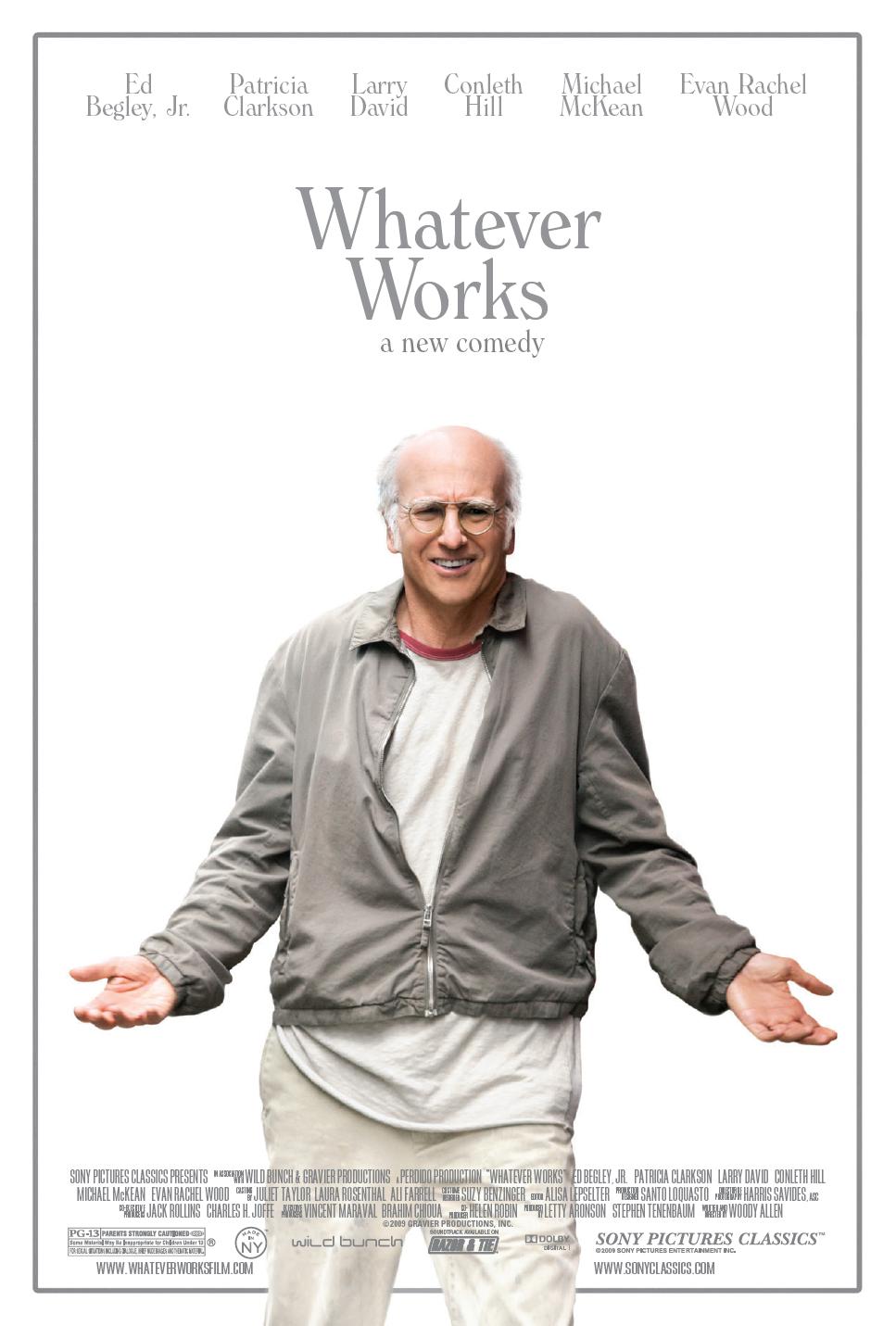
There’s a scene early in Whatever Works, Woody Allen’s latest film as writer/director, where the protagonist Boris (Larry David) looks directly into the camera and points out to his fellow characters: “Look! There’s an audience out there!” And I thought to myself: wow, you’re being a bit optimistic there, mate.

Whatever Works is quite a watchable film, but it’s yet another Allen tale of an aging neurotic who takes up with a much, much younger woman – in this case, Melody, a runaway played by Evan Rachel Wood. Melody’s lack of sophistication and education, and the attempts of Allen/David’s character to improve her, is played for comedy; you wonder if Soon-Yi ever watches these films and says, hang on, is that supposed to be me? Chances are that she, and you, have already seen quite a few of these films. Do you really feel that you need to see another?

Allen has never been a particularly big player in financial terms, but prior to his catastrophic break up with Mia Farrow had enough of a following to make it worthwhile bankrolling his films. After that, the (thrown out) allegations of child abuse and his relationship with his ex-partner’s adopted daughter, his portrayal of a man dating a high school girl in Manhattan seemed less like self-deprecating analysis and more like a warning.

His stock, at least in the UK, has sunk so low that the films in which he takes a lead role are guaranteed to go straight to DVD. His most successful recent films, Match Point and Vicky Christina Barcelona, were promoted respectively as a sexy thriller and a starry romcom set in a beautiful city. In both cases, you had to squint to see his name on the poster.

Even in the films where Allen hands over the lead to another actor, his authorial voice is so strong and familiar that the surrogate is almost forced into an Allen-esque performance; such as John Cusack in Bullets over Broadway. (Kenneth Branagh in Celebrity is reportedly one of the worst offenders, though I haven’t seen that one.) Vicky Christina Barcelona successfully disguises this problem by giving the Allen role to a woman, Rebecca Hall.

Larry David’s screen persona is, at least on paper, cut from similar cloth to Allen’s. Despite – or maybe because – of this, he manages not to come over purely as Allen’s sock puppet in Whatever Works. In fact, some of the most interesting moments came when I found myself thinking, “Hmm, Woody would have delivered that line differently.”

The film’s only real problem – but it’s a big one – is overfamiliarity; it feels like all the other Woody Allen films you’ve already seen. Perhaps if he didn’t knock one out every year, despite now having to chase across Europe for funding, this wouldn’t be a problem. But as it is, a new Allen film isn’t an event, it’s just something that happens on a regular basis, and the reality is that you only really need to see about five of his films before you die. For my money, those five would be Annie Hall, Manhattan, The Purple Rose of Cairo, Hannah and her Sisters, and Crimes and Misdemeanours. Now, some might wish to substitute a personal favourite for one or more of those (and if you do want more, there are plenty to choose from) but the fact remains that if you’ve seen any five Allen films, you’ve pretty much seen them all… even the good ones.
She’s Out of My League

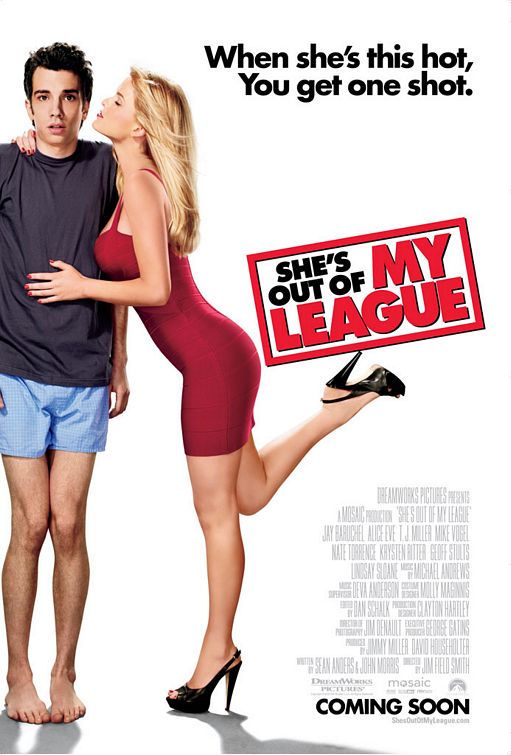
She’s Out of My League is one of many films that attempt to marry romantic comedy with a healthy dollop of lowbrow, crowdpleasing humour, in the manner of There’s Something About Mary. Unfortunately it doesn’t manage either strand as successfully as the Farrelly brothers.

The film is the story of an average guy called Kirk (Jay Baruchel) who, by a quirk of product placement, meets and starts dating Molly (Alice Eve). Molly is something of a looker, whereas the nicest thing you could say about Jay is pale but interesting. She is, on the face of it, very much out of his league, as she would be out of most people’s. Surely, then, the possibility of this relationship being a success is so against the odds as to be an offence to the laws of nature?

The script goes out to emasculate Kirk at the start, having him still pining for his ex-girlfriend after two years, and have her and her current boyfriend living with his parents. His entire family is so ghastly that they never rise above the level of cartoons. It’s made plain that Molly has her own neuroses, but some of these are left unresolved – a sub plot about her lying to her parents (played by Alice Eve’s real life parents) about her job is left dangling.

The film’s comic highlight comes when Kirk becomes over excited as Molly gets amorous, only for her parents to unexpectedly visit at the worst possible moment. It works because everyone can relate to the fear of this happening, even if they haven’t suffered it themselves.

The other amusing scenes come courtesy of Kirk’s little team of friends, who painstakingly explain that Molly is a 10, whereas Kirk is closer to 5 (and this includes points for being funny, and deductions for driving a crap car) – thinking that adds to Kirk’s lack of confidence. A lot of the other laughs are centred around knob gags, with varying degrees of success. Factor in Molly’s sharp-tongued sidekick Patty, and you have one of those films where the supporting cast are more fun than the leads.

So, watchable enough, quite amusing, but not really in the big leagues.

StreetDance 3D

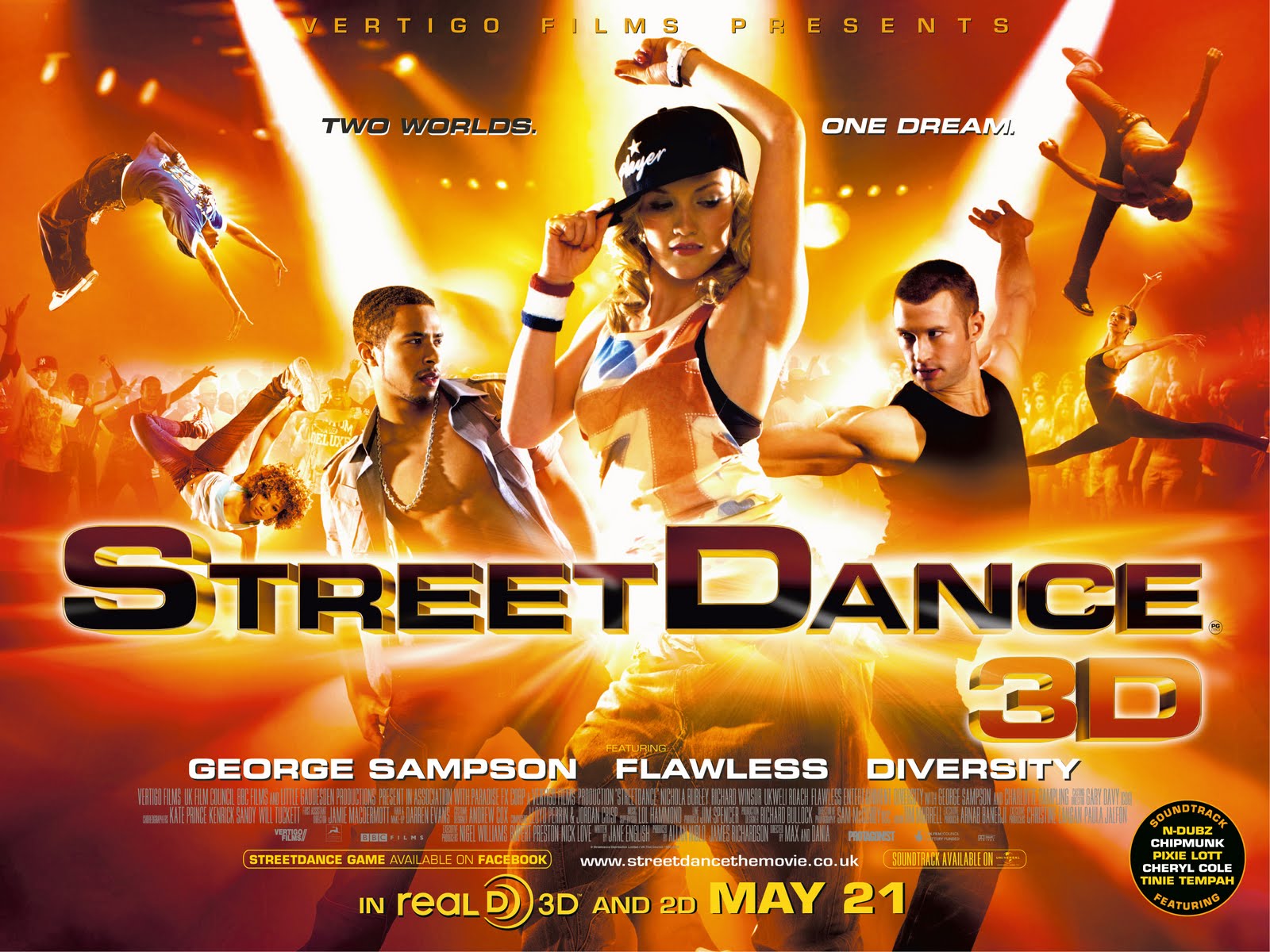
Sometimes, a film like Robin Hood just looks too bloated and pompous, too long and dull. Sometimes you just want something light and frothy. Preferably in 3D. Which is when you want something like StreetDance.

StreetDance is about a crew of street dancers, whose leader Jay takes time out five weeks before the UK street dancing championships – because, like, work and uni and that are getting really heavy, yeah? His roles of choreographer and deliverer of inspiring motivational speeches are left to his girlfriend Carly (Nichola Burley) who, unable to afford rehearsal space, makes a deal with ballet school tutor Charlotte Rampling; she will have unlimited studio time in return for taking some of the ballet students into her crew.

Well, you think, I don’t see that working out. Ballet and streetdance mixing? Why, they’re worlds apart! It’s not like they’re going to learn valuable lessons from each other, mix their disparate styles in ways that tear up the rulebooks and come up with a winning routine in just five weeks, is it? (Spoiler alert: actually, it is.)

Nobody ever went to a film like this for the screenplay, and the dialogue here barely reaches the level of functional. Casting for dance skills over acting ability means you have to expect some wooden turns, and indeed you get them. More disappointingly, Nicola Burley (who can be good – just watch Kicks for the evidence) seems to have been dragged down to the same level. In one early scene she manages to make the line, “Why didn’t you tell me? I looked completely stupid,” sound as though it was written as “Why didn’t you tell me I looked completely stupid?”. As for her various morale-raising speeches to her crew, she doesn’t sound as though she believes a word of it.

But the dancing is what counts, and StreetDance offers plenty of it. Various people from TV talent shows crop up; of the ones I’d heard of, Diversity only get one scene, but George Sampson pops in and out throughout before his big solo near the climax. There were probably others.

I’m something of a 3D agnostic; it’s fun for a bit, but after a while I stop noticing it (even in Avatar) – which makes me wonder what the point is. Still, if any film ought to benefit from 3D it’s this one, and the technique is indeed used well throughout. It’s quite consciously designed to show off the moves, throwing in some funky bullet time moments, though some of the overhead shots make people appear freakishly tall.

You can’t pretend StreetDance is a good film, but it delivers what it says on the tin, and I didn’t look at my watch once. Bet that wouldn’t have been true of Robin Hood.

Hot Tub Time Machine

In the latest issue of Empire, John Cusack says of Hot Tub Time Machine, “I think if you get a great title for a movie, the rest will write itself.” One hopes he’s not being entirely serious. Unfortunately, the makers of HTTM seem happy enough to let the concept do most of the work.

Adam (Cusack), his old buddy Nick Webber and his nephew take their suicidal, alcoholic friend Lou back to the ski resort where they spent some of the highlights of their youth. Here, an accident with a hit tub turns it into a time machine which transports them back to 1986, obliging them to grapple with the risks of the Butterfly Effect and the temptation of changing their futures for the better.

So far, so good. But much of the comedy is puerile; lots of dick and blow job gags, with a ridiculously unconvincing bit of projectile vomiting near the start setting the tone. I like a good knob gag as much as the next man, but the regret the characters feels for their hopes and dreams – you know, the emotional core of the film – gets smothered under a steady flow of bodily fluids.

Cusack is good, of course, but deserves better. Chevy Chase has a peculiar cameo as a possibly magical/science-fictional hot tub repairman, which doesn’t really work. If going for an 80s icon, why not someone who was in Back to the Future (Crispin Glover has a part, after all)? Then again, Bill Murray would have been better, but frankly the film isn’t aiming for that kind of quality.

A couple of other good points: Lizzy Caplan is in it, though in a too-small part, and any film which includes Animotion’s Obsession on the soundtrack wins points from Uncle Frank. Though it also reminded me how much more I enjoyed Adventureland last year.

Still, if you like toilet humour and are old enough to have seen Back to the Future in the cinema, this is very much the film for you.

Four Lions and The Infidel

Honestly – you wait ages for a British comedy about crazy Islamists, then two come along (almost) at once. Kind of.

OK, not really. But The Infidel and Four Lions – two comedies with Muslim protagonists, both written by white men more associated with TV comedy – have been released in sufficient proximity to make comparisons inevitable, if arguably unwarranted.

Of the two, The Infidel is the least political. It focuses on the odd friendship between Omid Djalili’s not-very-devout Muslim who learns he is a Jew adopted at birth, and Richard Schiff’s drunken cabbie. Much comedy of embarrassment follows, as Mahmud Nasir (Djalili) attempts to act Jewish, attends a bar mitzvah, and an Islamist protest rally.

His identity crisis offers some decent laughs, though drawn from often quite broad stereotypes. But David Baddiel’s screenplay also throws in an antagonist for our confused hero in the form of Arshad El Masri, a fanatical preacher who espouses his own selective reading of the Koran, and is Mahmud’s prospective father in law.

El Masri is the sort of smiling, but mad, preacher who might have helped radicalise the protagonists of Four Lions. Baddiel is rightly unafraid to mock him – he has a follower with a metal claw in place of one hand, clearly inspired by the tabloids’ favourite panto villain, Abu Hamza. The latter part of the film is driven by the clash between him and Mahmud’s we’re-not-so-different-under-it-all philosophy.

Sadly, the resolution to this clash and the way in which Mahmud triumphs is based on an absurd plot twist that is straight ouot of a TV sitcom of the My Family mould. It doesn’t ring even faintly true for a moment, and lets the film down badly.

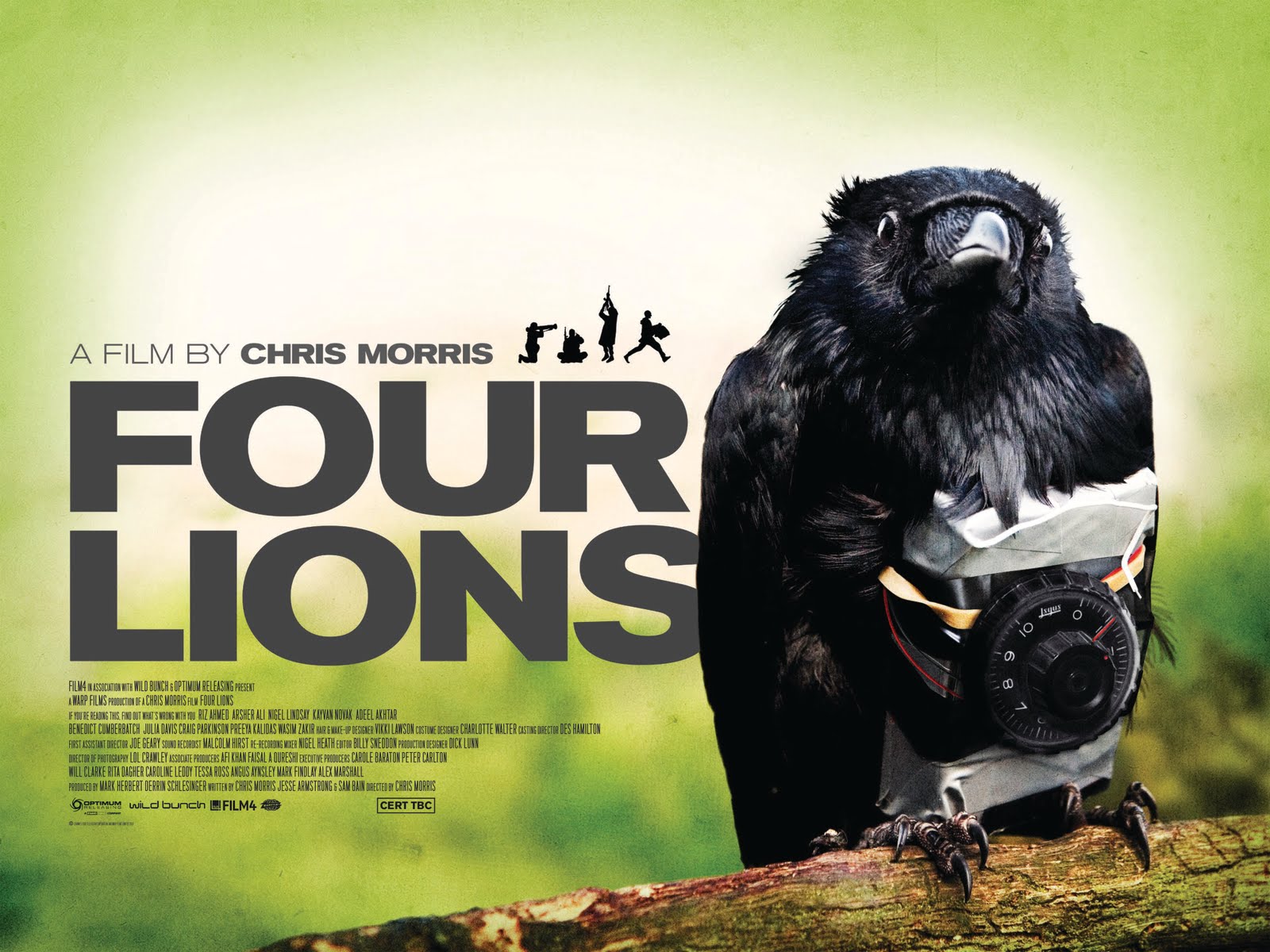
Chris Morris’ feature debut Four Lions is much harder edged. It follows in the comedy tradition of a group of apparent friends, bound to each other by some need without necessarily liking each other, who manage to disastrously overcomplicate a simple plan. Other tales of male camaraderie would feature a group of people trying to organise a stag night, or maybe start a business together, or become a bunch of strippers… with hilarious consequences (I’ve always wanted to write that).

The film follows a group of bumbling would-be jihadis as they variously plan a suicide bombing campaign, flunk their training in Afghanistan – a sequence which pays off with a corking gag at the close – and record their suicide videos, ending up only with outtakes. The comedy comes from the fact that they fumble their way through their schemes less like a Spooks-style sleeper cell, and more like the heroes of Dad’s Army. It’s often very funny, but also chilling as the consequences of the group’s fanaticism are illustrated; a mix that the less sharp toothed The Infidel does not attempt.

If the film has a weakness, it’s that their motivations for mass murder are suggested, but left unexplored. Sure, some of them are none too bright and easily led. Barry, the white Islamic convert, is a crazed nihilists looking for a way to channel his hatred of everything. But Omar – the film’s central figure and hero of sorts – must surely have thought about it more deeply. What exactly was the point when this husband and father decided to kill himself, and as many others as possible, and why does his wife support it? (Does she think he won’t actually go through with it?)

Whether Four Lions will result in a storm of Brass Eye style outrage from idiots who can’t cope with the idea of finding humour from suicide bombers remains to be seen (the Daily Mail might still be getting its breath back after it’s fury over Kick Ass). Perhaps Chris Morris will have to go into hiding to escape a fatwa. I hope the film will be widely seen; not only is it good entertainment, it might just make a few possible suicide bombers think twice.